You could be throwing money away every morning. Not because your supplements are low quality - but because the format you're taking them in means your body never fully receives what's on the label.
Bioavailability is one of the least discussed topics in sports nutrition, yet it determines whether your supplement stack actually does anything. This post breaks down what bioavailability means, why pill-based supplements often underdeliver, and what the science says about liquid and liposomal delivery methods.
What Bioavailability Actually Means
Bioavailability is the percentage of a nutrient that enters your bloodstream and reaches the tissue that needs it. It sounds straightforward. It isn't.
A nutrient in a pill or capsule faces a demanding obstacle course before it does anything useful. Stomach acid attacks the coating. Digestive enzymes go to work on the compound itself. The nutrient must then dissolve at the right rate, cross the intestinal wall - a highly selective barrier - and survive first-pass metabolism in the liver, which degrades a significant portion before it ever circulates.
The result: standard solid-form supplements can leave a significant portion of their stated dose unabsorbed before it reaches your bloodstream. For athletes with elevated nutritional demands, that gap between what's on the label and what's actually absorbed is functionally significant.
Different nutrients compound this problem in different ways. Fat-soluble vitamins like D3 and K2 require dietary fat to be present simultaneously. Minerals compete for the same intestinal transporters. B vitamins in crystalline form are often poorly cleaved from their carrier molecules. The variables stack up fast.
Why Ionic Liquid Electrolytes Absorb Efficiently
For electrolytes specifically - sodium, potassium, magnesium, calcium - format matters in a specific way. These minerals are ionic in nature, meaning they absorb best when already dissolved and surrounded by water. A tablet that needs to fizz or a capsule that needs to crack open introduces unnecessary delay and inefficiency, particularly mid-training or post-exertion when your body's demand is at its peak.
When electrolytes are already in ionic solution, they are immediately available for absorption upon reaching the small intestine. There is no disintegration step, no waiting for dissolution. That is the relevant mechanism - not liquid format in general, but the ionic availability of the minerals themselves.
Liposomal Delivery: What the Science Shows
For fat-soluble and water-soluble vitamins, liposomal encapsulation works through a different mechanism entirely.
A liposome is a tiny spherical structure made of phospholipid bilayers - the same material that forms your cell membranes. When a nutrient is encapsulated inside a liposome, it is protected from stomach acid and enzymatic degradation during transit. It travels through the digestive tract largely intact. Because the liposome is structurally compatible with cell walls, it can fuse directly with them, delivering the nutrient intracellularly.
This essentially bypasses first-pass liver metabolism. The nutrient arrives where it is actually needed.
Research in this area is ongoing and worth following closely. Studies on liposomal vitamin C - including independent research not involving SUPPLME - have shown plasma concentrations higher than equivalent doses in standard oral forms at comparable doses. Vitamin D contributes to the maintenance of normal muscle function, one of its EU-recognised roles, and adequate delivery to the cellular level is relevant to how that function is supported. B vitamins contribute to normal energy-yielding metabolism - EU-approved nutritional functions that depend on the nutrients actually arriving.
The Practical Gap Between Adequate and Optimal
A full pill organiser creates a sense of control. But if a significant portion of those compounds are leaving your body unabsorbed, you are not supplementing effectively.
For endurance athletes, adequate micronutrient status supports the body's normal physiological functions - including those relevant to energy metabolism and muscle function, as recognised under EU nutritional guidelines. Delivery format is one of the factors that determines whether adequate status is maintained.
The format is part of the product. This is not a minor detail buried in a specification - it affects whether the product does what it is supposed to do.
Frequently Asked Questions
Are liquid vitamins better than pills for everyone? For many people, liposomal formats offer meaningfully higher bioavailability than standard tablets or capsules for certain nutrients. Athletes with elevated nutritional demands are among those most likely to notice the difference. The relevant factor is the delivery mechanism - liposomal encapsulation for vitamins, ionic solution for electrolytes - rather than liquid format as a blanket category.
What does the research say about liposomal vitamin C absorption? Independent studies - not involving SUPPLME - have shown that liposomal vitamin C can result in higher plasma concentrations compared to standard oral forms at equivalent doses. Research is ongoing and results vary by study design, but the mechanistic rationale for improved absorption is well established in the literature.
Do liquid electrolytes work faster than tablets or capsules? Yes. Because liquid electrolytes are already in ionic solution, they begin absorbing almost immediately upon reaching the small intestine. Tablets and effervescent formats first need to disintegrate and dissolve, adding time - which matters when you are depleted mid-session and need rapid mineral replenishment.
Can I just take my pills with more water to improve absorption? To a degree, yes - hydration status does affect absorption. But water does not solve the disintegration bottleneck, the first-pass metabolism issue, or the bioavailability limitations of the compound's form itself. Format is a more significant variable than hydration volume alone.
What Should You Actually Do?
If performance and recovery are priorities, audit your supplement format before you audit your supplement list. Look for electrolyte products in true liquid form where the minerals are already in solution, and for vitamins, consider liposomal encapsulation where the science supports it - particularly for vitamin C, vitamin D3, and B vitamins.
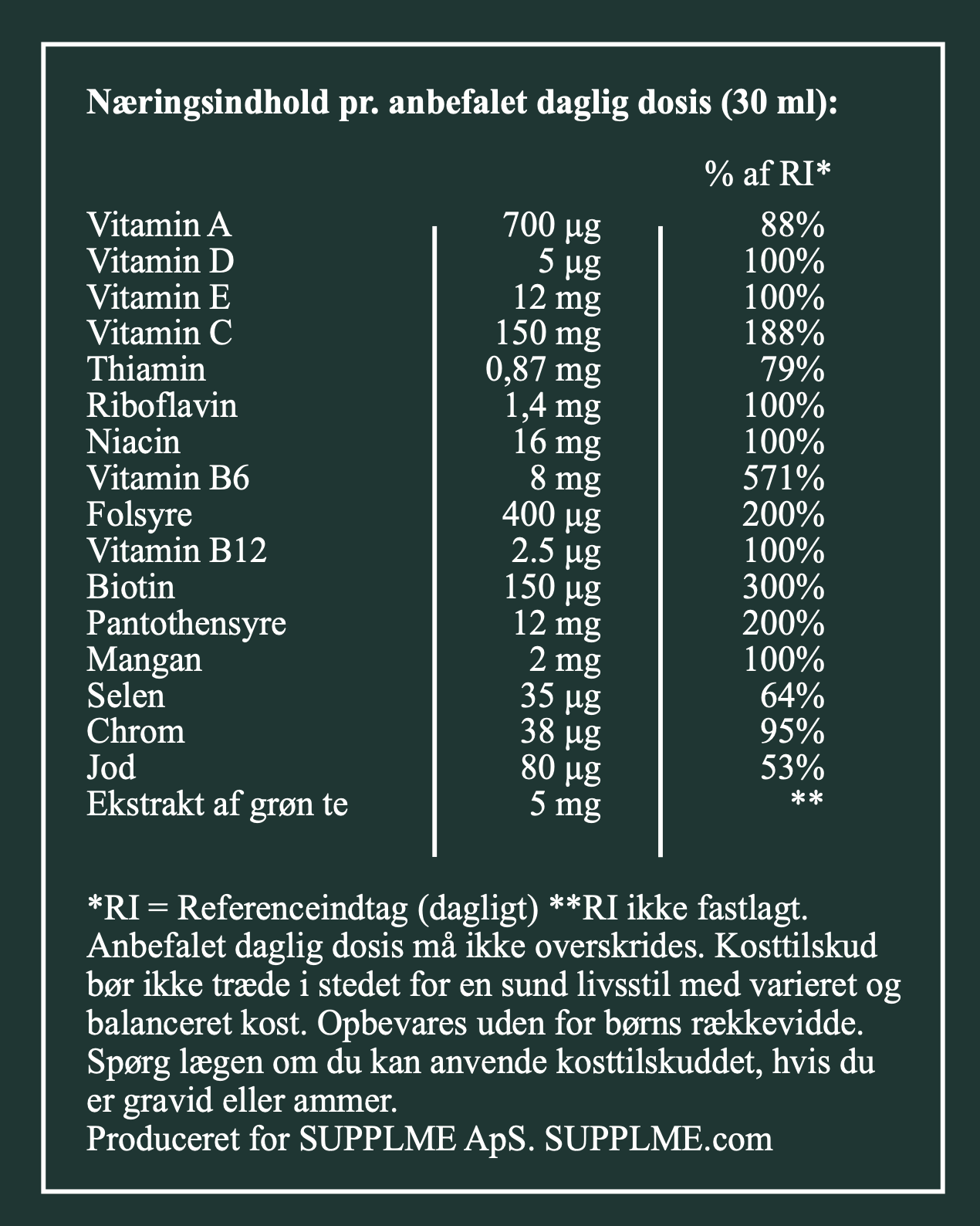
SUPPLME Liquid Electrolytes and Liquid Vitamins & Minerals are built around exactly this principle - delivery formats chosen because the biology supports it. If optimising your micronutrient intake is a priority, delivery format is worth considering alongside dose and ingredient quality.
Science over hype. Always.